
In the heart of the Fox River Valley, a massive warehouse rises from the rural prairie, surrounded by tallgrass bending in the wind. The Northern Illinois Food Bank’s west suburban distribution center is a spectacle. And for good reason.
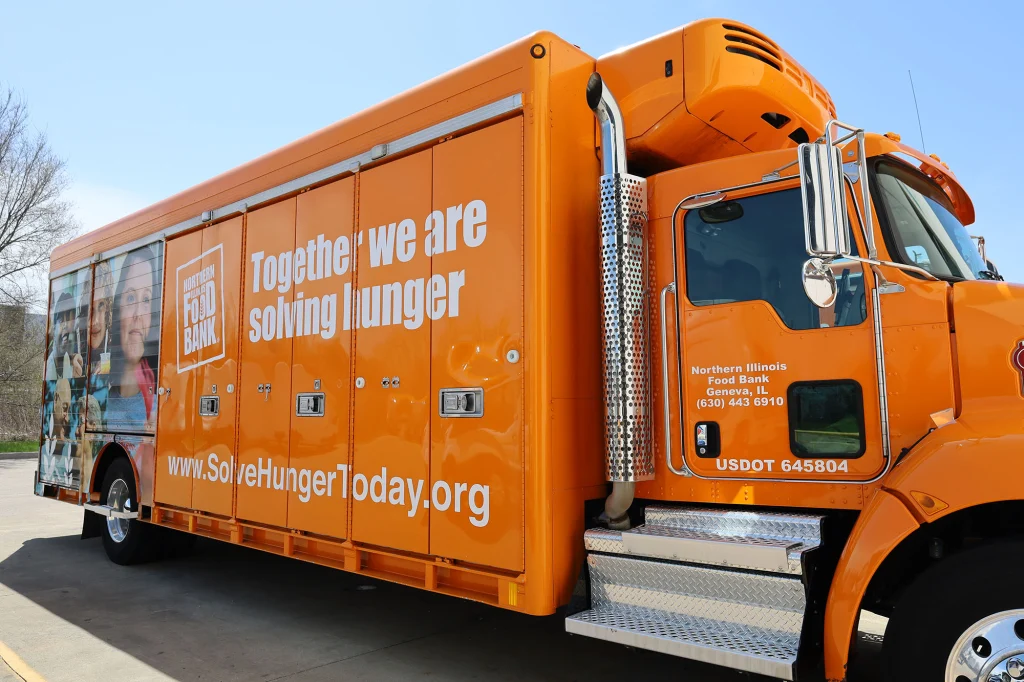
The 150,000-square-foot building in Geneva distributed more than 100 million pounds of food last year. Food that went to its network of over 900 local food pantries, soup kitchens, and shelters across 13 counties – plus Northern Illinois Food Bank’s own direct service programs like a mobile market and online food pantry.
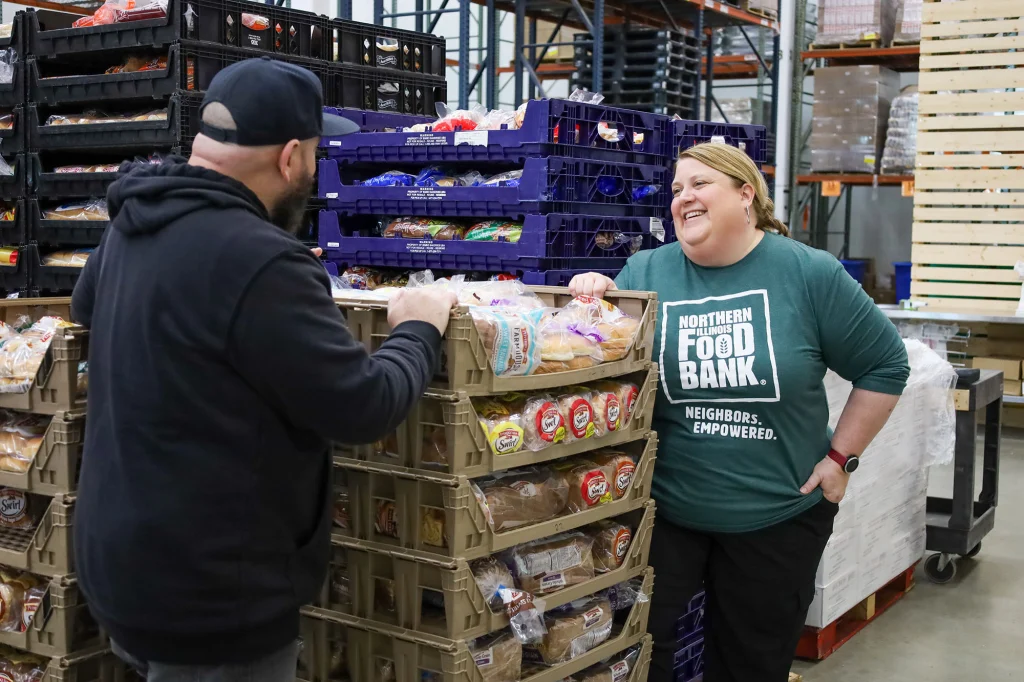
Forklifts glide across the warehouse floor. Skilled operators transport pallets of canned vegetables and boxes of cereal from towering metal shelves to trucks waiting in loading docks. It’s a well-oiled machine – and has been for decades.
The Northern Illinois Food Bank was founded by Sister Rosemarie Burian, in 1982 to address hunger in northern Illinois. Called Bethlehem Center at the time, the food bank distributed 64,000 pounds of food its first year.
Today, 43 years later, Northern Illinois Food Bank serves an average of 570,000 neighbors a month, which is double pre-pandemic numbers, said Jennifer Bucko Lamplough, Chief Impact Officer at Northern Illinois Food Bank.
“The need is historically high, the highest it’s been since 2014,” Jennifer said, explaining that food insecurity is far reaching and affects people you may not realize. “Food insecurity means you don’t have enough money to buy groceries for you and your family to have a healthy life,” she said. “Many of the neighbors we serve are employed but underemployed. Maybe they make too much money to get SNAP benefits, but they don’t make enough to make ends meet.”
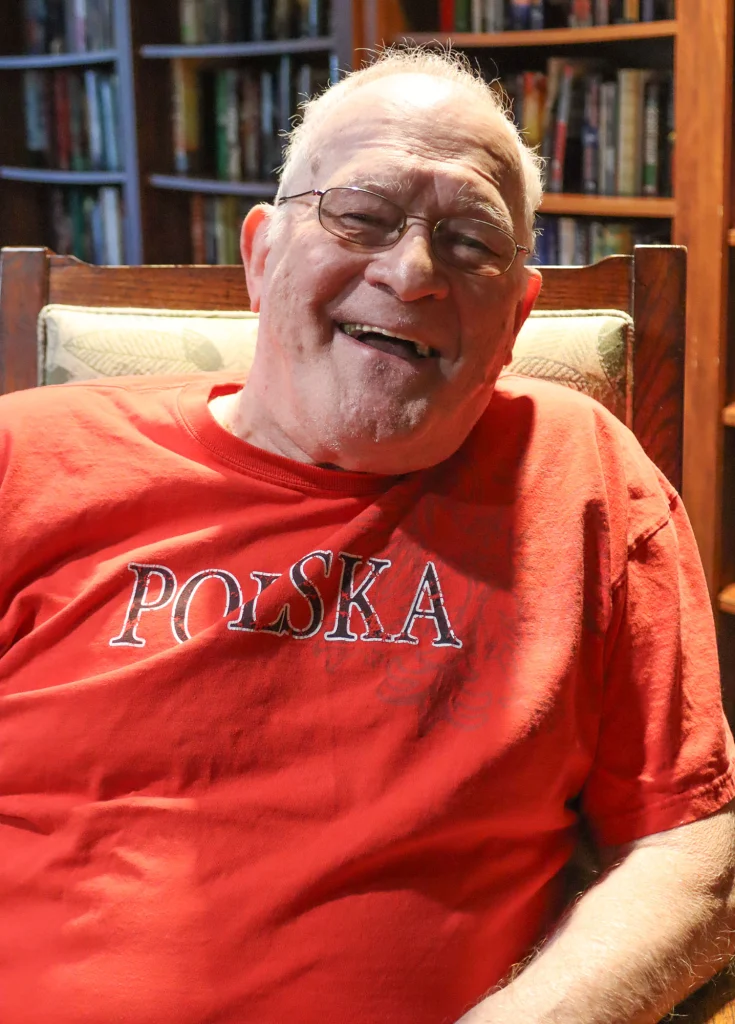
One of these neighbors is 79-year-old Robert. He works at a local grocery store to help pay his bills and afford his medication. He regularly visits the Northern Illinois Food Bank’s Senior Grocery Mobile program, which sets up shop in his building. Residents in the senior housing community can choose from fresh produce and non-perishable staples at the pop-up food pantry.
“I am on a lot of medications and the free food market helps me pay other bills and afford other things I need,” Robert said. “It helps those of us who have to budget for food, especially if you have medical concerns and need to eat healthy food or follow a certain diet.”
Robert also spoke highly of the pantry volunteers – and their compassion. “God bless the volunteers and donors. We always need people willing to help others,” he said.
Jennifer sees that willingness to help through Northern Illinois Food Bank’s many partnerships, including with United Way of Metro Chicago.
“United Way of Metro Chicago has been working with us since 2019 and really supported us during the pandemic,” Jennifer said. “They’ve stayed as a great partner, helping us get food out to the community and literally into the hands of our neighbors.”
During times of economic uncertainty and rising food costs, these partnerships – and the commitment to ending hunger – give Jennifer hope.
“No one is just hungry. Food is a symptom of a larger issue in the community, and the community has to come together to help solve that problem,” Jennifer said. “We couldn’t do what we do without partnerships, from our volunteers, member agencies, food pantries, shelters, program partners, and donors.”
“What gives me hope is that we are still thriving. We see all these people coming to donate and volunteer and advocate for us. That hasn’t changed,” she said. “Even if it’s just a dollar or little bit of time, it provides hope because it means people care.”